Grant Operations & Workflows
How to build a grant approval workflow
Published by Fundamentl, the company behind FoundationOS. Editorial policy
The short answer
Give every approval stage an owner, an entry condition, a decision, and an exit condition. Define how conflicts, missing information, and absent reviewers are handled before you automate the process.
- Model decisions and ownership before automation.
- Document what happens when a review cannot proceed.
- Keep the decision record separate from informal discussion.
On this page
Worked example · illustrative
Example: a reviewer is unavailable
Illustrative scenario: a staff reviewer is absent before the board deadline. The program manager reassigns the review, records why, and checks that the replacement can access the correct records. The application does not move to the board merely because a deadline passed.
1. Define stages with observable outcomes
A useful starting sequence is intake, eligibility, review, recommendation, decision, and award handoff. Adapt it to your program. Each stage should end with an observable result, such as a completed review or a recorded decision.
2. Agree on roles and decision rules
Write down who can see the record, who can change it, and who has authority to decide. Follow your organization’s governing documents and approved policies; software settings do not create decision authority.
Separate administrative checks from substantive review.
Document how conflicts are declared and handled.
Define when additional review is required and who may authorize it.
3. Design the exception paths
Run a sample application through the process with a missing document, a conflicted reviewer, and an approval condition. A returned record should retain its history and have a named next owner. Avoid silently moving blocked records forward.
4. Pilot one cycle before broad rollout
Test with a small group using sample data. Ask the applicant, reviewer, administrator, and decision maker to describe their next action without coaching. Fix unclear ownership before adding reminders or more automation.
Put it into practice
Approval workflow checklist and stage template
Use this editable template to agree on responsibilities and test an approval cycle with your team.
0 of 6 checked
Checks are temporary for this visit. Use the editable template to keep your notes.
Preview the editable template
# Grant approval workflow template

Program: ____
Process owner: ____

## Stage record (repeat for each stage)
Stage name: ____
Accountable owner: ____
Entry condition: ____
Reviewer / decision maker: ____
Required evidence: ____
Possible decisions: proceed / return / decline / hold
Exit condition: ____
Conflict or absence handling: ____
Who is notified: ____
Where the decision is recorded: ____

## Test cases
- [ ] Missing document
- [ ] Reviewer conflict
- [ ] Reviewer absence
- [ ] Applicant correction
- [ ] Returned recommendation
- [ ] Conditional approval

Decision authority and board procedures must follow the organization's own policies.
A useful next read
Post-award grant management: what to track after approvalSet up an award record that connects conditions, reports, payment readiness, grantee communication, and closeout.
Want to see FoundationOS in action?
Bring questions about applications, reviews, awards, and reporting to a FoundationOS product demo.
Scheduling opens on Calendly in a new tab.
Share this strategic guide with your team & trustees
Pre-formatted for executive discussions, committee reviews, and board presentations.
Keep learning
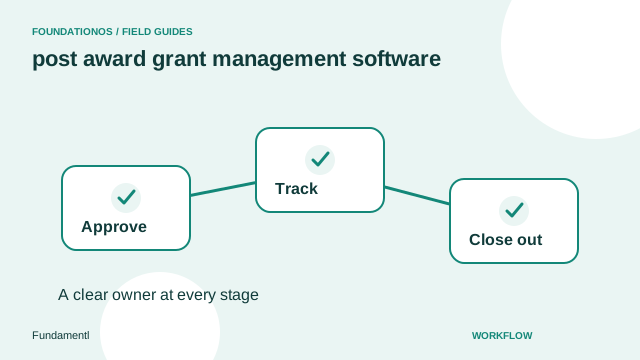
Post-award grant management: what to track after approval
Set up an award record that connects conditions, reports, payment readiness, grantee communication, and closeout.
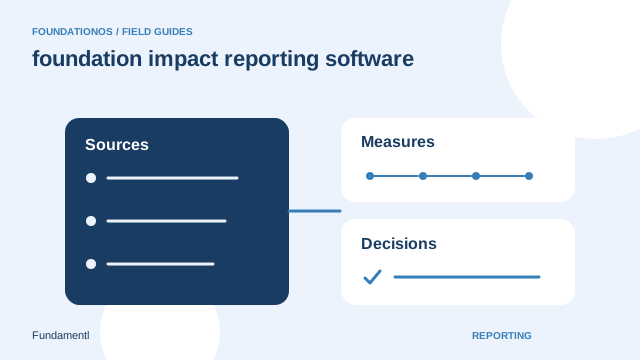
How to build useful foundation impact reports
Choose meaningful questions, define measures, and separate grant activity from evidence of outcomes.
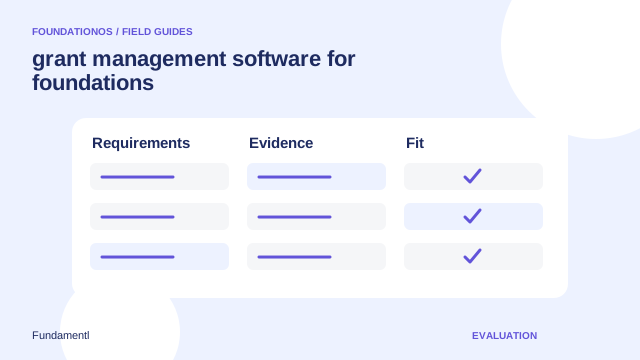
How to choose grant management software for your foundation
Build a requirements list, run a realistic demo, and compare evidence before choosing grant management software.